



By Clement Akoloh
Midrand, South Africa – Ghanaian legislator and Member of the Pan-African Parliament (PAP), Hon. Frank Annoh-Dompreh, has called on African leaders to move beyond policy declarations and harness the continent’s vast natural resources, trade opportunities and environmental assets to drive industrialisation, economic transformation and shared prosperity.
Speaking during a high-level working lunch between the Pan-African Parliament and the South African Institute of International Affairs (SAIIA), Hon. Annoh-Dompreh said Africa possesses significant strategic advantages, including critical minerals essential for the global energy transition, but has yet to translate these assets into measurable economic benefits for its people.
The engagement brought together members of the PAP Bureau and Chairpersons of Permanent Committees to review the achievements of South Africa’s G20 Presidency, Africa’s role within the G20 framework and the implications of the incoming United States Presidency for the continent, particularly on debt, trade, climate finance and BRICS.
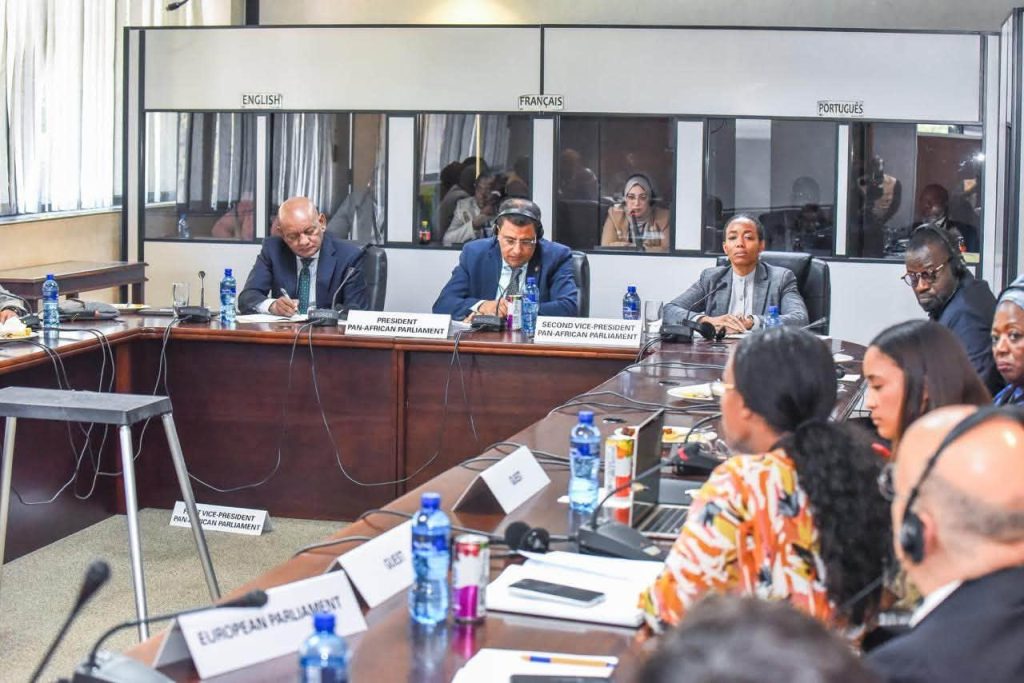
Hon. Annoh-Dompreh stressed that Africa’s abundance of critical minerals should provide the continent with greater bargaining power in the global energy transition. He questioned whether African countries had developed a coordinated continental strategy to govern, process and commercialise these resources, warning that the continued export of raw minerals would deny the continent the full economic value of its natural wealth. He argued that value addition, local manufacturing and industrial development must become central to Africa’s development agenda.
Responding to his intervention, Ms. Jordan McLean of Southern Transitions noted that Africa controls about 30 per cent of the world’s key mineral reserves and should leverage this position to negotiate stronger partnerships while promoting domestic processing and participation across strategic value chains. She cautioned that external powers were pursuing African minerals not only for the clean energy transition but also for broader strategic interests.
The Ghanaian lawmaker also questioned the fairness of the global climate finance architecture, noting that developed countries had repeatedly fallen short of commitments to support developing nations despite contributing the bulk of historical greenhouse gas emissions.
He observed that while industrialised countries built their economies through carbon-intensive development, African countries are now expected to industrialise under stricter environmental conditions. He therefore called for practical financing arrangements and technologies that would enable Africa to pursue industrial growth without compromising its climate obligations.
Ms. McLean acknowledged Africa’s disproportionate vulnerability to climate change despite its relatively low contribution to global emissions. She highlighted climate adaptation finance, resilient infrastructure, climate-smart agriculture and technology transfer as key priorities advanced under South Africa’s G20 Presidency.
On carbon markets, Hon. Annoh-Dompreh called for greater transparency and stronger regulatory standards to ensure carbon-credit initiatives genuinely benefit African communities and national economies. He warned that weak oversight could allow exploitative arrangements that fail to deliver meaningful environmental or economic returns.
Turning to the African Continental Free Trade Area (AfCFTA), the Ghanaian MP described the agreement as one of the world’s most significant trade arrangements but said its benefits were yet to be fully experienced by ordinary Africans. He urged African institutions and Member States to accelerate implementation by addressing infrastructure deficits, regulatory barriers and logistical challenges that continue to hinder intra-African trade.
In response, Ms. McLean cited the Ubuntu Legacy Initiative, developed in collaboration with the African Development Bank during South Africa’s G20 Presidency, as one mechanism aimed at supporting commercially viable cross-border infrastructure and strengthening regional trade.
Concluding his remarks, Hon. Annoh-Dompreh urged policymakers, researchers and continental institutions to communicate African integration frameworks in ways that ordinary citizens can understand and appreciate. He maintained that the success of Africa’s engagement with the G20 should ultimately be measured not by policy declarations but by tangible improvements in industrial development, debt sustainability, climate resilience, expanded trade and the livelihoods of African people.
Source: parliamentnews360.com


