


The Ghana Revenue Authority (GRA) has declared its total support for the swift passage of the Tax Exemptions Bill since according to the Head of Exemptions at the GRA, Mrs. Adelaide Botchway, Tax Exemptions in the country are outstripping the revenue collections. While adding that the sheer abuse of the Tax Exemption Regime is making it very difficult for the entity to meet its annual targets.
“Critically, it appears the exemptions are even outweighing the revenues that we are collecting; and then the abuses are also on a higher side. But GRA is trying as much as possible to monitor the exemptions and then curb the abuses,” Mrs. Adelaide Botchway observed.
She made this known at a Stakeholders Roundtable Meeting on Ghana’s Tax Exemption’s Bill held on Thursday, August 12, 2021 at the La Palm Royal Beach Hotel in Accra to advocate for the Tax Exemption Bill which expired with the 7th Parliament to be reintroduced into the 8th Parliament for its consideration and passage.
“The purpose of this roundtable meeting is for stakeholders to deliberate on ways to bring the Tax Exemption Bill back to parliament for consideration,” the Project Coordinator for the Legislative Advocacy, Gilbert Boyefio indicated at the meeting in a brief presentation of the project overview.
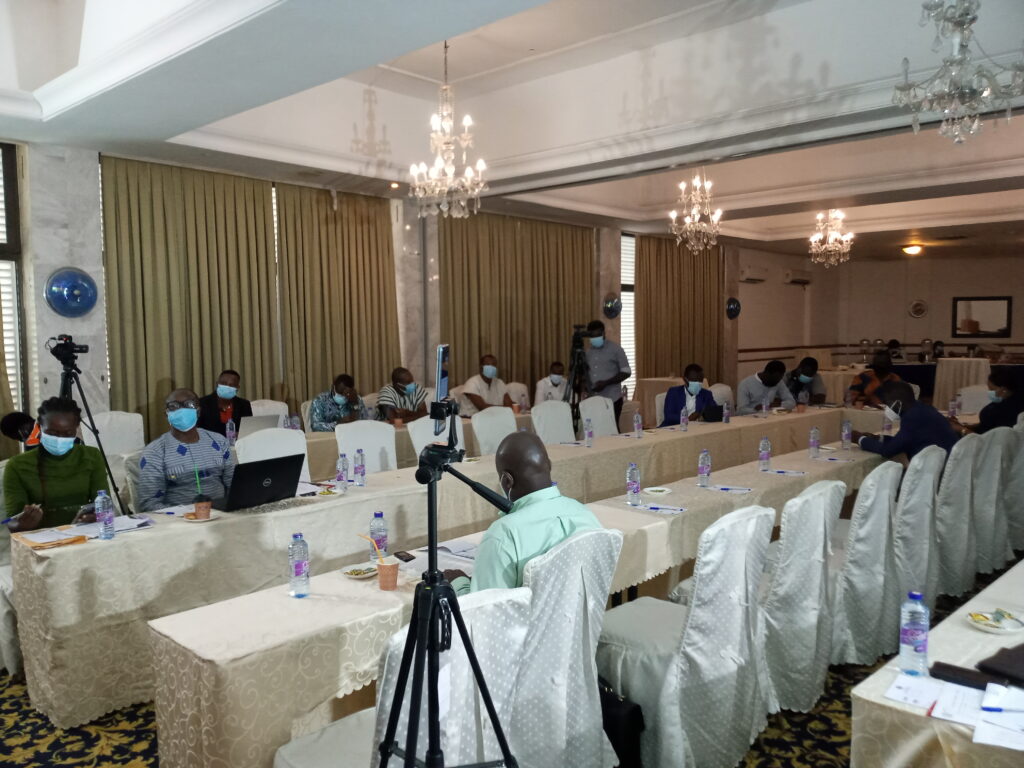
The Legislative Advocacy Project by the Tax Justice Coalition Ghana, in collaboration with the Ghana Anti-Corruption Coalition (GACC), and the Parliamentary Network Africa (PNAfrica) is being funded by OXFAM in Ghana.
Some individuals and institutions present were selected to be part of a Working Group to help fine tune the current draft Bill. Also, some four Members of Parliament were identified as Tax Exemption champions to spearhead the passage of the Bill into law.
The Working Group members include: The Ghana Federation of Disability; Dr. Ali Nakyea, a Tax Expert; Nana Adwoa Tana II, from SSF; Mr. Benedict Doe, from GII; and Mr. Daniel Oberko, from PSI.
Project Context:
The Tax Exemptions Bill presented to the 7th Parliament could not pass due to the lack of political will. While the Finance Minister presented the Bill to Parliament, the Ministry did not show the same enthusiasm to ensure its passage.
Ghana provides a number of tax exemptions and incentives to encourage private investment and reduce the tax burden on certain sectors of the economy and the less privileged.
Despite the purpose of tax exemptions to incentivize certain types of investors, firms and taxpayers, this is not inuring to the benefit of the state due to its inherent abuses which results in the accumulation in tax expenditure, and in the end create distortions in the economy.
In 2013, the country lost an estimated 5.2 percent of Gross Domestic Product (GDP) in revenue accumulated from the tax expenditure. While value-added tax (VAT) exemptions and preferential VAT treatment reached 4.2 percent of GDP, customs exemptions hit 0.9 percent.
In 2020, the Ghana Anti-Corruption Coalition (GACC), Tax Justice Coalition (TJC) and Parliamentary Network Africa (PNAfrica) secured funding from Oxfam to undertake a project titled, “Legislative Advocacy on Ghana’s Tax Exemptions Bill”, which commenced on November 30th and ended on December 31st.
Unfortunately, the objective of the advocacy which was mainly to ensure the Exemptions Bill is given urgent consideration in Parliament; was not fully achieved due to the 2020 General elections. Per parliamentary practice, all the legislative work of a particular parliament dies with its dissolution, which means that the new Parliament will have to receive another Exemptions Bill and start the legislative process all over again.
With the inception of the 8th Parliament, it has become necessary for stakeholders to be re-engaged on the Bill, and the advocacy relaunched to get the Tax Exemption Bill back to Parliament. This proposed project seeks to engage major stakeholders, such as the ministry of finance, the Ghana Revenue Authority, the Finance Committee of Parliament, CSOs and the media, to find a common path towards getting the Tax Exemptions Bill back to Parliament and passed.
Source: Clement Akoloh||parliamentnews360.com


